
How Hawk-Eye Revolutionized Cricket Umpiring


In the high-stakes world of modern cricket, a single millimeter can be the difference between a World Cup trophy and a heartbreaking exit. Gone are the days when an umpire’s "gut feeling" was the final word on a complex leg-before-wicket (LBW) appeal. Today, that responsibility rests on the shoulders of Hawk-Eye, a sophisticated ball-tracking system that has become the backbone of cricket officiating.
From its debut in 2001 to becoming a non-negotiable part of the Cricket Tournaments like the IPL and ICC World Cups, Hawk-Eye has fundamentally changed how we play and watch the game.
The Origins: From a Lab to Lord’s
Hawk-Eye was the brainchild of Dr. Paul Hawkins, a PhD in Artificial Intelligence and a former county cricketer. He realized that while the human eye is incredible, it struggles to track a ball moving at 150 km/h, especially when predicting where that ball would have gone after hitting a batsman’s pad.
The technology made its official television debut in May 2001 during a Test match between England and Pakistan at Lord’s. Initially used only as a broadcasting tool to engage fans, its accuracy was so undeniable that the ICC eventually integrated it into the official Decision Review System (DRS) in 2008.
The Tech Stack: How Hawk-Eye Works
Hawk-Eye isn’t just a "camera"; it is a complex computer vision system that combines geometry, physics, and high-speed data processing. Here is the step-by-step breakdown:
1. High-Speed Camera Capture
Modern Cricket Stadiums are equipped with six to ten high-speed cameras positioned strategically around the ground (typically on the roof or high stands). These cameras record the action at approximately 106–120 frames per second, which is significantly faster than standard broadcast cameras.
2. 2D to 3D Triangulation
The system identifies the "pixels" representing the ball in every frame. By comparing the 2D images from at least two different camera angles, the computer uses a principle called Triangulation to calculate the ball’s exact (x, y, z) coordinates in 3D space.
3. Predictive Path Analysis
This is where the magic happens for LBW decisions. If the ball strikes the batsman's pad, the system uses the data gathered before impact—including the ball's speed, bounce, swing, and dip—to calculate its statistically most likely path.
Did You Know? Hawk-Eye is currently accurate to within 2.6 mm to 5 mm, making it one of the most precise measurement tools in professional sports.
Impact on the Decision Review System (DRS)
The introduction of Hawk-Eye has added a layer of transparency that didn't exist two decades ago. Fans can stay updated on the latest tech-driven results via Cricket News, where controversial DRS calls are often the top headline.
Comparing Performance: Human vs. Tech
| Feature | Human Umpire | Hawk-Eye Technology |
|---|---|---|
| Reaction Time | ~0.2 Seconds | Microseconds |
| Perspective | Single angle (behind stumps) | Multi-angle (360-degree) |
| LBW Prediction | Subjective estimation | Physics-based trajectory |
| Consistency | Can vary with fatigue/pressure | 100% consistent logic |
Accuracy, Limitations, and the "Umpire's Call"
Despite its brilliance, Hawk-Eye is not a "magic wand." It operates within a margin of error, which is why the controversial Umpire’s Call remains part of the game.
- The 50% Rule: If less than 50% of the ball is projected to hit a specific part of the stump (or if the point of impact is marginal), the system defers to the on-field umpire’s original decision.
- Post-Bounce Data: If the ball travels a very short distance after bouncing before hitting the pad, the system has less data to work with, which can slightly increase the uncertainty of the prediction.
For a deeper dive into the visual data of these decisions, check out our Cricket Video Gallery, which features archival footage of the most famous DRS overrules in history.
Frequently Asked Questions (FAQs)
1. Is Hawk-Eye 100% accurate?
While it is highly precise (within a few millimeters), no technology is "perfect." It provides the most statistically likely path based on laws of physics, but the "Umpire’s Call" exists to account for the tiny margin of error.
2. Does Hawk-Eye account for pitch cracks or wind?
Hawk-Eye measures the ball’s behavior until the point of impact. If a ball hits a crack and deviates, the cameras capture that movement. However, it does not "guess" future deviations caused by hypothetical cracks further down the pitch.
3. Who owns Hawk-Eye?
Hawk-Eye Innovations is currently a subsidiary of Sony, providing services not just to cricket but also to tennis (line calls) and football (goal-line technology).
4. Why is it called "Hawk-Eye"?
It is named after its inventor, Dr. Paul Hawkins, and also serves as a pun on the "hawklike" vision the system provides.
Key Takeaways
- Invented in 2001 by Dr. Paul Hawkins to provide objective ball-tracking.
- Uses triangulation from 6+ high-speed cameras to map a 3D path.
- Crucial for LBW decisions, where it predicts if the ball would hit the stumps.
- Maintains a high level of accountability for on-field officials.
- The Umpire’s Call remains necessary to account for the system's marginal error range.
Summary (Featured Snippet)
Hawk-Eye revolutionized cricket by introducing a computer-vision system that tracks a ball's trajectory via high-speed cameras. By using 3D triangulation and physics-based predictive modeling, it allows the Decision Review System (DRS) to accurately adjudicate LBW appeals, significantly reducing human error and enhancing the game's fairness.
Explore the Future of Cricket Interested in how data continues to change the sport? Explore professional-grade cricket analysis and deeper technology insights on Cric Predictor, where we break down the innovations shaping the modern game.
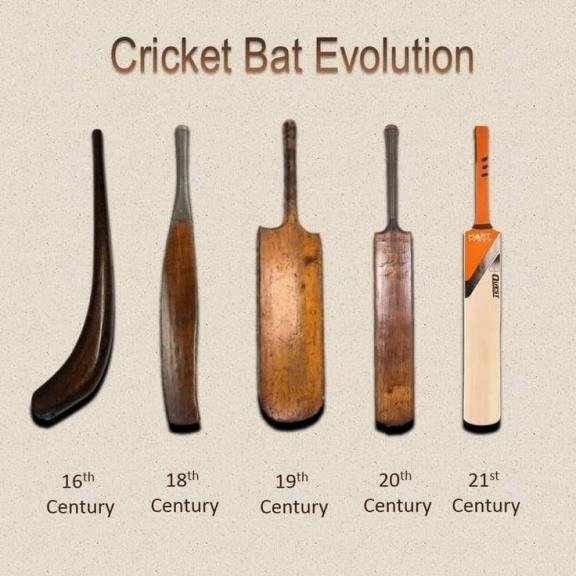
The Evolution of Cricket Bat Technology

How Ball-Tracking Technology Works in LBW Decisions
How DRS Changed the Game of Cricket Forever

The Impact of DRS on Modern Cricket


